Water and wastewater treatment is an essential service that protects public health and the environment. However, it’s a complex field that’s laden with technical jargon and intricate procedures. This guide helps break down these complexities, providing clear and practical insights into important aspects of water and wastewater treatment. Let’s dive in, shall we?
The Basics of Water Treatment
Water treatment is a several-step process aimed at reducing or eliminating various contaminants in water. It’s a critical process, because while the human body can handle some level of impurities, certain contaminants can bring severe health risks.
The first step, coagulation and flocculation, involves usage of chemicals that bind contaminants creating larger particles, called floc. Sedimentation then allows for the separation of these particles. In the filtration step, water flows through various filtration systems to remove any small particles and contaminants not captured by the previous steps. Finally, disinfection ensures any lingering toxins or pathogens are neutralized.
Are you wondering where you can access more detailed, real-time information on water treatment processes? A brilliant resource is water and wastewater, a website chock-full of various facets of water and wastewater treatment.
A Deep Dive into Wastewater Treatment
Wastewater treatment follows a somewhat similar process but tends to be slightly more complicated, due to the nature and variety of pollutants involved.
The preliminary stage, also known as screening, involves removing larger objects in the water, such as rags and plastic bottles. In the primary treatment stage, settling tanks are utilized to allow the separation of heavy particles, which then form sludge at the bottom.
Secondary treatment is where things get a bit more technical, with the usage of biochemical reactions to break down biodegradable organics. The final stage is tertiary treatment, also known as advanced treatment, designed to remove stubborn pollutants not eliminated in the previous stages.
The Significance of Testing in Water and Wastewater Treatment
To ensure the effectiveness of treatment processes, testing plays a crucial role. Various types of testing, including routine and non-routine, are conducted. Some crucial parameters to test include pH, chemical oxygen demand, biochemical oxygen demand, and turbidity. What’s more, testing for specific pollutants, such as lead, arsenic, or nitrates, may be necessary depending on geographical location or specific industrial activities.
Here’s an interesting fact: a report by the Water Research Foundation (2013) indicates that the US alone conducts approximately 330 million water quality tests annually! Quite staggering, isn’t it?
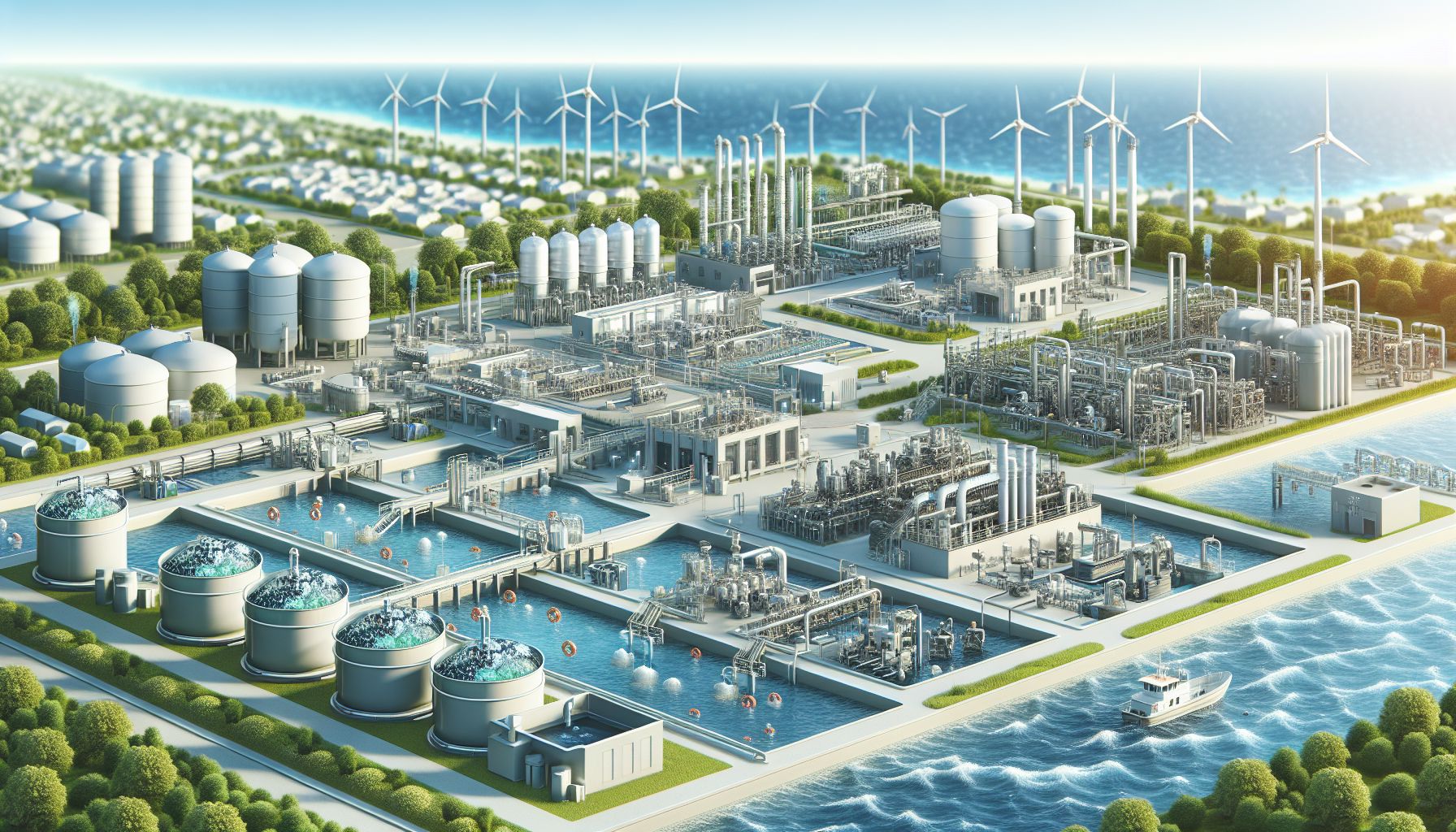
Technological Innovations in Water and Wastewater Treatment
In this age of rapid technological advancements, even the water and wastewater treatment sector is not left behind. Technologies such as smart water networks and advanced filtration systems promise to revolutionize the sector.
Smart water networks utilize real-time information and communication technologies to improve operational efficiency and customer service. They offer numerous benefits, including leak detection, remote meter reading, and enhanced system control.
On the other hand, advanced filtration systems, such as membrane bioreactors, provide superior pollutant removal than conventional treatments systems. They offer higher effluent quality and lower environmental impacts.
The Future of Water and Wastewater Treatment
As the global population increases and pollution continues to rise, effective water and wastewater treatment will become even more critical. Climate change, too, is expected to exacerbate water scarcity and necessitate efficient treatment and reuse of water resources.
Looking into the future, some anticipate that wastewater will be considered more as a resource than a waste. This view aligns with the emerging concept of the circular economy, seeking to recover valuable components, like nutrients and energy, within the wastewater instead of merely discarding it.
What’s more, treatment plants are expected to become more energy-efficient, potentially transforming into net energy producers instead of consumers. Exciting times ahead, indeed!
In Conclusion
Water and wastewater treatment is a fascinating world, filled with both challenges and opportunities. This expert guide hopefully sheds some light on its complexity while illustrating its importance. It’s a field that is constantly evolving, driven by necessity and innovation. So, let’s keep exploring, shall we? Our health and the health of our planet depend on it!