Successfully managing a wastewater treatment plant can be likened to conducting a symphony of interrelated processes. The operator needs to deftly manipulate each part of the procedure to create a perfect harmony of clean effluents, while maintaining ecological standards. It’s no small task. After all, did you know that a standard wastewater treatment plant processes millions of liters of sewage every day? Hence, a comprehensive understanding of its operations and monitoring is crucial.
The Core Processes of Wastewater Treatment
At their heart, wastewater treatment plants deal with biological process management. They leverage naturally occurring microbes to break down organic waste substrates. Sounds simple enough, but the devil lies in the details, right?
The primary treatment step involves mechanical screening to remove large debris, followed by sedimentation. This process removes around 60% of the suspended solids and 35% of Biological Oxygen Demand (BOD) using simple physical processes. Now, these numbers might not seem impressive to you. Why not deploy a more effective method straight away, you might ask? Well, simple physical processes are cost-effective and crucial to preventing clogs, blockages, and damage to downstream equipment.
The secondary treatment employs biological processes to remove organic matter. Here the sewage is mixed with microbes that feed on the organic waste. The ‘activated sludge’ method is one of the most commonly used secondary treatment processes. This method involves the creation and management of a microbial flock that feeds on the organic waste to reduce it. However, controlling these biological processes is complex, requiring both art and science in equal measure.
Tertiary treatment, the final stage, ensures the removal of residual organic matter, harmful microbes, and nutrients like nitrogen and phosphorus. It can involve chemical treatment, filtration, or advanced disinfection methods like UV irradiation.
Monitoring the Operations
Smart monitoring underlies the successful operation of a wastewater treatment plant. It primarily includes the surveillance of two areas – process parameters and effluent quality.
When it comes to process-related monitoring, parameters like BOD, pH, temperature, and dissolved oxygen must be kept in check. Reliable and accurate data in these areas can determine the overall operational efficiency of the plant. For instance, BOD levels, a fundamental parameter, signify the amount of organic matter present, indicating the efficiency of the biological treatment. Low BOD in the final effluent is a positive sign.
Monitoring the quality of the effluent is another critical facet. This involves testing for undesirable components that can harm either human health or the environment. This is where the Environmental Protection Agency (EPA) stipulations come into play. The EPA sets maximum contamination levels for numerous pollutants to safeguard our water bodies. Regular effluent sampling and testing are crucial to ensure compliance with these standards.
However, beyond these regular checks, maintaining operational efficiency also necessitates a keen observation of unexpected changes, peculiar patterns, and small red flags.
The IWA water treatment resources provide insightful guidance on advanced monitoring approaches, including the use of predictive analytics and machine learning. These advanced tools are becoming more prevalent as they offer an intelligent way to optimize plant performance and minimize operational costs.
Integrating Automation in Wastewater Treatment
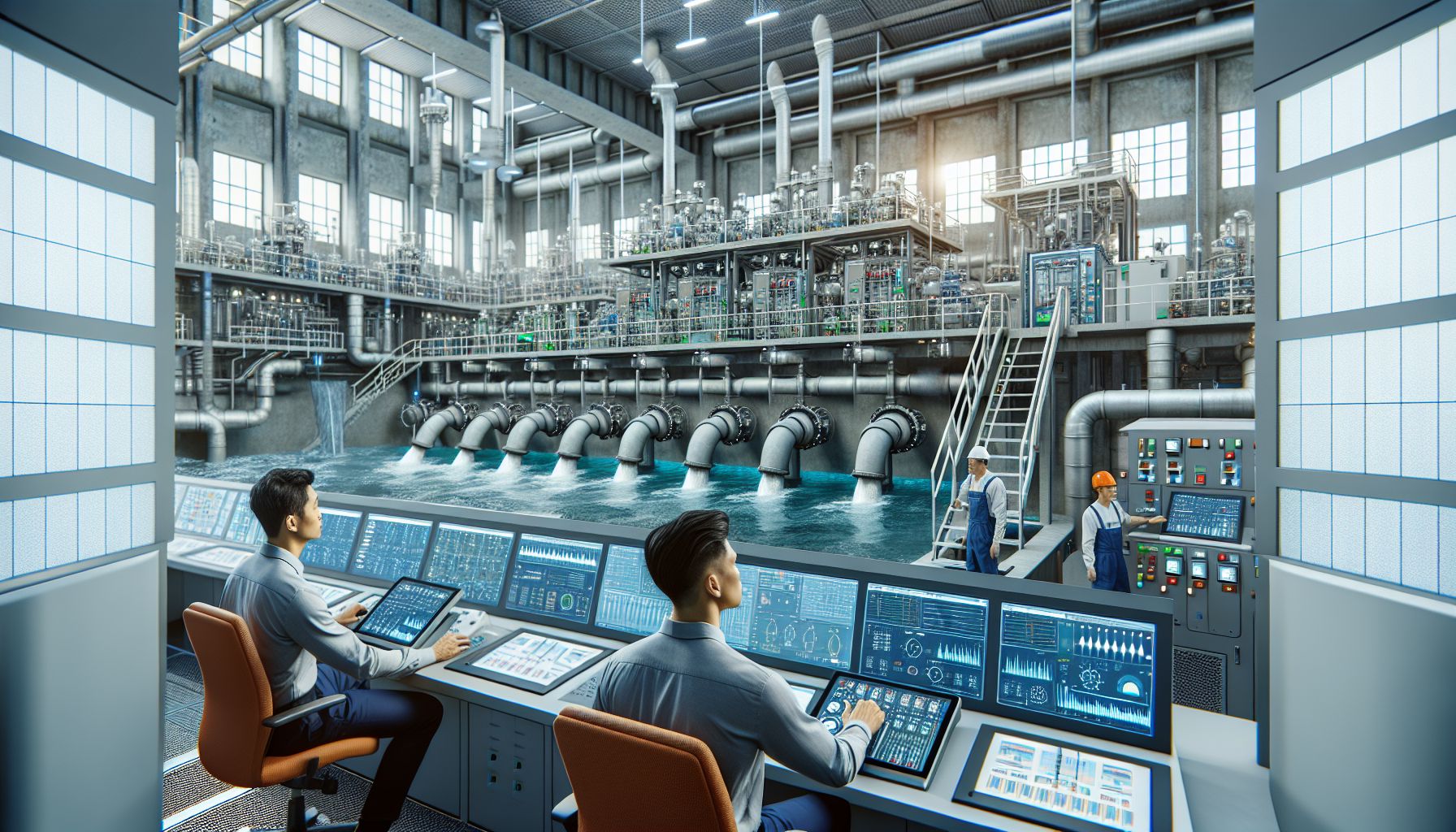
The reality of modern wastewater treatment is that operators can no longer afford to rely solely on manual observation and controls. The complexity of processes and the scale of operations demand a more advanced approach. And that’s where automation comes into play.
Automated control systems can manage complex treatment processes efficiently, ensuring the consistent quality of the treated water. In essence, automation serves as the conductor of our symphony, controlling every note from beginning to end, thereby freeing up operators to focus on other essential tasks.
Moreover, it allows operators to respond promptly to potential issues. For instance, a sudden spike in BOD levels may indicate a problem with the biological treatment process, and the automated system can alert operators to take immediate corrective measures.
The Legal and Environmental Aspect
Beyond the technicalities of running the plant, operators should also be well-versed in legal and environmental aspects. They need to be familiar with local and international regulations governing wastewater treatment. Regular audits and inspections are part of the game, with fines levied for non-compliance. This regulatory landscape adds another layer of complexity to the operation and monitoring of treatment plants, necessitating robust compliance strategies.
Going hand in hand with regulatory compliance is the commitment towards reducing environmental impact, as operations should align with best practices for resource conservation and waste reduction.
The Future of Wastewater Treatment Plant Operations
What does the future hold for wastewater treatment operations and monitoring? Much like other sectors, the industry is poised to be dramatically reshaped by advances in technology.
The adoption of Industry 4.0 technologies, such as the Internet of Things (IoT), big data analytics, and artificial intelligence, will transform traditional operations, enabling higher levels of efficiency and accuracy.
So, are you ready to embrace this rapidly evolving landscape of wastewater treatment? Bear in mind that mastering the complexities of plant operations and monitoring calls for an intricate blend of technical expertise, practical experience, and strategic thinking. Hence, continuous learning and upskilling are sure to be the order of the day for every successful wastewater treatment professional in the years to come.