The problem of water scarcity is not exactly breaking news. As natural freshwater reserves continue to diminish, there’s an urgent need to find alternative and sustainable ways to meet our water needs. Once such alternative is the adoption of greywater treatment and recycling technologies. Ever wondered how these systems work to provide a sustainable source of water? Let’s dive in and explore.
Understanding Greywater
First, it’s essential to know what we are talking about when referring to ‘greywater.’ It’s simply any domestic wastewater produced, excluding sewage. The key difference between ‘greywater’ and ‘blackwater’ (sewage) is that the former is easier to treat and recycle back into your home.
Greywater Treatment Technologies
Technology plays a central role in the treatment and recycling of greywater. To put it simply, these technologies aim to remove contaminants, making the water safe for reuse. Innovations in this field vary widely based on complexity and cost, and can be broadly classified into biological, chemical, and physical processes.
Biological Treatment Processes
Biological processes rely on bacteria, fungi, and other microorganisms to break down organic matter in greywater. These include treatments such as activated sludge, trickling filters, and constructed wetlands. Activated sludge and trickling filters are tech-intensive processes, requiring a significant degree of monitoring and control. In contrast, constructed wetlands are low-tech, replicating natural wetland processes to treat greywater.
Chemical Treatment Processes
In chemical treatment processes, chemical agents are added to greywater to trigger reactions that detoxify harmful substances. These processes can effectively remove pathogens and pollutants from greywater, but the treated water may require further treatment before it is suitable for reuse.
Physical Treatment Processes
Physical processes use mechanical or physical force to treat greywater. Techniques like filtration, flotation, sedimentation, and adsorption fall under this category. These processes can be relatively simple and cost-effective, but may not be entirely efficient in removing certain pollutants.
Some technologies combine elements of biological, chemical, and physical processes. For example, the Membrane Bioreactor (MBR) combines the activated sludge process with micro or ultrafiltration membranes, providing highly effective treatment.
Greywater Recycling Technologies
Once greywater undergoes treatment, recycling technologies come into play. The essence of recycling is reusing treated greywater for various applications such as toilet flushing, garden irrigation, and even laundry washing.
Let’s look at a real-world example of advancements in greywater recycling. The Pennsylvania water programs have embraced this solution, setting up strict standards for greywater reuse and encouraging building owners to integrate greywater systems into their premises. 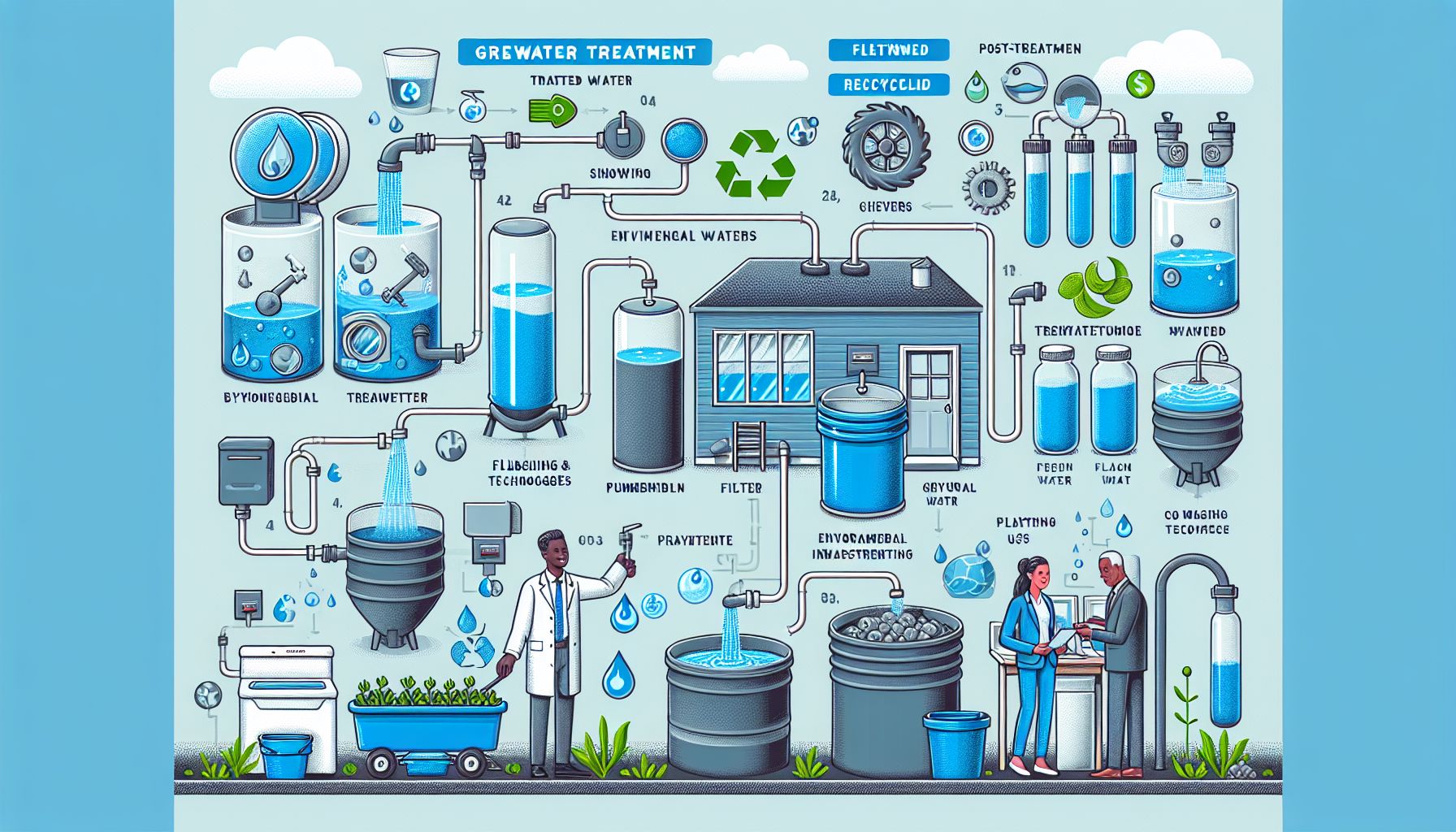
The successful implementation of these programs signifies a bright future for greywater recycling technologies, with potential spreading well beyond Pennsylvania’s borders.
Factors Affecting the Selection of Greywater Treatment and Recycling Technologies
A variety of factors come into play when selecting an appropriate greywater treatment and recycling technology. These include the quality of the source greywater, intended use of the treated water, availability of space, local regulations, and budget constraints.
For instance, a household with a small yard might choose a compact, integrated system, while a larger commercial property might opt for a constructed wetland due to its scalability and lower operational costs.
The Future of Greywater Technologies
In light of our growing water scarcity issues, the significance of greywater tech promises to become even more apparent. We can expect a growth in technological innovation fueled by necessity and an emphasis on sustainability.
While novel tech will continue to emerge, so will regulatory frameworks. Researchers and policymakers worldwide are acknowledging the need for more comprehensive standards and regulation in greywater practices. As greywater treatment and recycling mature as an industry, what we can look forward to is further acceptance, standardization, and even potential subsidies to encourage wider adoption.
Greywater treatment and recycling aren’t just technological endeavors; they’re a societal shift – a step towards greater water responsibility and sustainability. As we grow more water-wise, the leap from looking at greywater as ‘waste’ to seeing it as a valuable resource isn’t too far off.
Conclusion
The path to sustainable water management must certainly include smart greywater practices. With the right mix of technologies and public consciousness, the greywater solution can go a long way in plugging the water scarcity gap. Surely, the current array of greywater treatment and recycling technologies provides great hope towards this end. Can we then imagine a future without stringent water shortages? With the right efforts, this isn’t beyond our reach.
Remember, when it comes to water, every drop counts – even if it’s grey.